- Wed 21 October 2026
- Event Report
- #gaming, #tournament
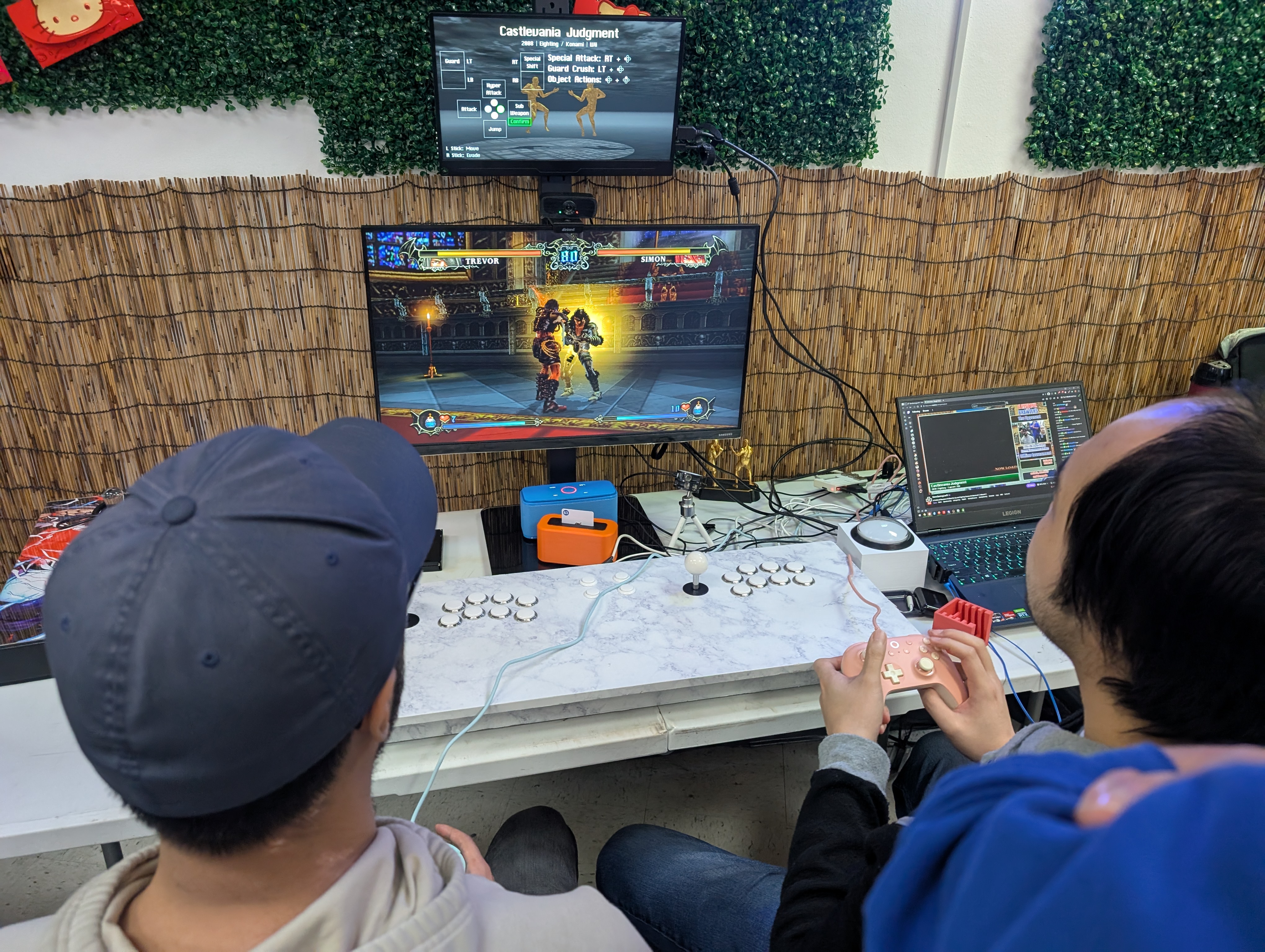
The primary purpose of these event reports after each tournament I run is to take note of any issues that arose during the event and any ideas I got to improve the experience for players and spectators for the next tournament. After The Big, Huge Mystery Games Tournament 3 this past August, preparations were aimed for the next one at Super MAGFest 2027 in January. Last month, Retro Gaming Live (Twitch, YouTube), a streamer collective I've performed for many times before, announced a new marathon dedicated to fighting games and beat-them-ups called A Fistful of Brawlers, to be held on October 17-18. My local mahjong parlor hosts weekly and monthly fighting game events, following the closure of the local fighting game community's previous meeting place. Weekly events are held on Fridays and monthly events are held on the third Saturday of each month. This meant the October monthly and the start of A Fistful of Brawlers conveniently landed on the same day. This was an obvious opportunity for me to showcase my tournament format to RGL's stream audience, so I made arrangements to host a mystery games tournament at the venue for 6 PM EDT and stream it on A Fistful of Brawlers with a guaranteed time slot.
I bring my setup every Friday I'm able to in order to introduce new games to the local community, far outside their regular games, currently including Tekken 8, Street Fighter 6, Fatal Fury: City of the Wolves, Marvel Tokon, and Avatar Legends, along with some legacy games like Soul Calibur II and Ultra Street Fighter IV. My long-term goal with this continued exposure to lesser known games is to gather interest in at least a few of them and turn the parlor's weekly meetings into our own local equivalent of the Mikado. I held multiple mystery tournaments of small scale in 2025 but was unable to do so this year until now. I designated this tournament as a Gaiden because I made many major experimental changes to the software and hardware, detailed below. The Big, Huge Mystery Games Tournament 4 is scheduled for Super MAGFest 2027, on Saturday, January 9, 2027, at 4 PM EDT.
Equipment Upgrades
I ran my past tournaments on a Beelink SER5, a mini PC with impressively powerful hardware for its size and cost. It was very portable and capable of running the vast majority of games I wanted to include in the tournament roster. However, after The Big, Huge Mystery Games Tournament 3, it started to show strange issues I wasn't able to diagnose. These problems included unpredictable slowdowns during games that disrupted gameplay, and I was unable to determine what was causing them. I resorted to pulling my old PC from 2016 out of storage and migrating all of my games and scripts to it. The setup is no longer portable in any way as I now need to transport a PC tower along with all of the other equipment. However, it's capable of running more modern games than the SER5 without compromise, as it's much more upgradable and expandable than a mini PC. It originally had a i5-6600K CPU, and I upgraded it to a i7-7700K from eBay, the fastest CPU the motherboard can accept. Its GPU is the Nvidia GeForce GTX 1060, which is far more powerful than the graphical component of the AMD Ryzen 5 5500U APU in the SER5 despite its age.
The setup currently requires a large number of cables due to my preference to avoid wireless communication, especially in buildings where interference is a concern. When I built my dual arcade controllers in 2017, they used older USB-A connectors and thick cables for both players. After the previous tournament, I replaced the ports with USB-C outlets, which allows me to use much thinner cables and slightly reduce cable clutter. Even this minor upgrade is an improvement where the cost is justified. The complete setup with streaming requires 25 cables:
For the PC:
- 2 for the arcade controllers
- 2 for the traditional gamepads
- 1 for the microcontroller that drives button lights
- 1 for the large flashing menu launcher button
- 1 for the card reader
- 1 ethernet cable
- 2 power cables for the lights in the arcade controls and the menu button
- 1 HDMI cable to monitor or television
- 1 audio cable for the portable speakers
- 2 power cables, one each for the PC and the display
For the Raspberry Pi:
- 1 HDMI cable to a second monitor
- 1 specialized power adapter for the Raspberry Pi
If another PC (usually a laptop) is used for streaming:
- 1 HDMI capture device
- 2 additional HDMI cables for a splitter, with its own power cable
- 1-2 webcams
- 1 microphone
- 3 ethernet cables
- Unmanaged hub and power cable
- 1 power cable
I previously used a USB-to-TTL serial adapter connected to the Raspberry Pi to control its instance of mpv for changing the instruction sheets. This month, I began experimenting with MQTT for lightweight messaging between devices, using the built-in ethernet ports on the PCs and the Raspberry Pi. The main PC now runs Mosquitto for the MQTT broker, and the game launch scripts have been updated to issue messages for the Raspberry Pi that are translated to mpv commands to load different files. The script on the Raspberry Pi that listened for serial commands was changed to use the paho-mqtt library and subscribe to messages addressed to it. It's a surprisingly elegant software solution that handily replaces the fragile GPIO pins on the Raspberry Pi for external control with a common ethernet cable. Now that a LAN connection is being used to control mpv rather than GPIO, any computer can now be used to drive the instructions screen if it has a means to connect to the MQTT broker. This will preferably be a low-cost SBC or a very small PC with an onboard ethernet adapter or Wi-Fi radio, but Raspberry Pi specifically is no longer a requirement (it technically never was, but it was the best supported and lowest cost SBC at the time I wrote the original guide, and serial communication was the best way I knew of to control it from another device before I learned about MQTT). A cheap office PC can substitute it if an SBC can't be sourced, though the size and power consumption of such a PC isn't ideal for this purpose.
For the streaming PC, OBS runs Kruiz-Control, which supports responding to MQTT messages that are received by a listener program and controlling any aspect of OBS in response. For that, I wrote a basic Python script that implements a minimal MQTT client with paho-mqtt for Kruiz to respond to. The capture source has crop filters for each possible resolution, and Kruiz is configured to disable every filter when a MQTT message is received and then enable a single one that matches the resolution in the message, or a reset command that only disables all of the crop filters for games that run in 16:9 or when the game is unloaded. When only two devices are used in the MQTT network, they can be connected to each other directly with a single cable, but three devices requires a hub and its own power cable. This is a tradeoff that requires yet more cables to avoid wireless communication.
The Python scripts I wrote for the main PC and the SBC driving the instructions monitor are on GitHub, though the repository still points to an article on this site that is currently very out of date.
Tournament Preparations
The setup for my tournaments is much larger than typical setups for single games and requires much more space and power outlets. The venue is small and hosted multiple regularly scheduled tournaments, the main attraction being for Tekken 8. That tournament had a station for commentary and streaming, where multiple commentators sat down in front of a dedicated PC for the purpose. In contrast, I had a single table for all of the above equipment that I had to stand in front of for three hours. I ran the tournament alone without any support, as I am used to, since the organizers were occupied with their regular events. For my part, my attention was divided between calling matches, deciding games throughout the bracket according to available time, and interacting with the Retro Gaming Live chat, and so the photos at the top and bottom of this page are the only ones I took of the tournament that's fit to publish for this report. I mentioned in the last report that I could do with an assistant to delegate some of these tasks to, so in the future I may have to ask a waiting player to at least take photos for me.
Due to the two-hour time slot alloted for me during the first day of A Fistful of Brawlers, I treated this tournament as a time-constrained event and made extra preparations to control the pace of the tournament. After my last single-elimination tournament, I resolved to run all future tournaments as double elimination, so I planned on a cap of 8 players and prepared a number of games that run less than 2 minutes in the likely event that the tournament starts running behind schedule. An hour before the tournament was scheduled to start, no one signed up on their own volition, so I asked players around the venue to sign up and managed to find 11 players. I was told later that players in my area are in the habit of only signing up at the last minute. I know from past experience that when a venue runs multiple tournaments, some players will sign up for more than one, and so it's highly likely that some players will either not appear to check in or fail to appear for later matches. Also unlike the other tournaments held that day, mine had no signup fee, so there was no personal stakes should a player no-show. Indeed, one player missed their first match and got eliminated at the end of round 1, and another could not be found once the loser's bracket advanced and their opponent was given a bye.
The tournament began shortly after 6 PM and ran two and a half hours. In spite of the overrun, I was allowed to run the bracket to the end, as the marathon was itself ahead of schedule. The game before mine finished 30 minutes earlier than expected, so a backup game was played to fill time until my tournament began. The tournament itself ran largely without incident, with only one game failing to launch, and the game capture auto-crop had some issues with a few games due to misconfiguration on my part, but the event was warmly received. I originally planned on streaming the tournament to RGL and my own Twitch channel simultaneously and got permission to do so, but my laptop was unable to cope with two simultaneous encodes, so I streamed only on the former at a low bitrate, as the other tournaments in the building had priority over mine. I took the lessons from the previous mystery games tournament and ensured audio was being recorded of the players and myself. My own commentary was recorded on a wireless microphone, and the resulting audio was low quality due to my misunderstanding on how to properly configure it and the need to speak very loudly over the ambient noise. The players were recorded with my old Zoom H1 acting as a wired microphone, which I could have used in the last tournament if I had thought to bring it. On October 19, I watched my local recording of the tournament at high quality to provide further commentary.
Game List
46 games were played, and none were repeated.
- Virtua Fighter 2 (PS3)
- Mortal Kombat II Plus
- Soulcalibur IV
- EN-Eins Perfektewelt
- BlazBlue Chronophantasma Extend[a]
- Teenage Mutant Ninja Turtles Tournament Fighters [Grandmasters Edition mod]
- Art of Fighting 2
- Sailor Moon S [Big Zam Edition hack]
- Super Street Fighter II Turbo HD Remix
- Street Fighter Zero 3 Mix
- The King of Fighters XII
- Space Invaders: The Original Game (PC Engine CD)
- Street Fighter II Champion Edition [Re-Edit mod]
- Castlevania Judgment
- Dan-Ku-Ga
- Waku Waku 7 [7 Seconds]
- Fighting Vipers (Saturn)
- Sunset Riders (Genesis)
- Psychic Force 2012
- Dragon Master
- Blandia
- Virtua Fighter Animation[b]
- Battle Craze!! Type: M Complete
- Samurai Kirby
- Street Fighter II' Special Champion Edition [Speed 10]
- Karate (Atari 2600)
- Aqua Rush
- Tekken 3 Ball
- The Queen of Heart '99 SE
- Top Ranking Stars
- WeaponLord (SNES)
- Street Fighter Alpha 3 [Mazi mode]
- 1 on 1 Government
Winner's Finals
- Boxing (Atari 2600)
- Street Fighter II [Aimed Barrels hack]
- The Final Round [Powerful Mode][c]
Loser's Semi-Finals
- Puzzle Bobble 3
- Savage Reign
- Soulcalibur III [Olcadan Mirror match]
Loser's Finals
- Pretty Soldier Sailor Moon S (3DO)
- Battlecry
Grand Finals
- Last Bronx (PS2)
- Blade Strangers
- Justice League Task Force [SNES prototype][d]
- Plasma Sword
- Taekwon-Do
Note
Galaxy Fight is a game that is known to be configurable to a time limit of 1 second, as popularized by the Mikado. There are several other Neo-Geo games that can also be adjusted this way. I wanted to see what could be done with more than 1 second, so I added Waku Waku 7, its successor, with a save state that gives rounds 7 seconds. The following Neo-Geo games can have their time limits changed between 1-99 inclusive:
- Aggressors of Dark Kombat
- Fatal Fury Special
- Fight Fever (not recommended, because the characters start at the edges of the screen and most can't move forward fast enough to get into attack range in time)
- Galaxy Fight
- Waku Waku 7
- World Heroes 2 Jet (not recommended, because dashing wasn't introduced in this game yet)
- World Heroes Perfect
These games can be adjusted to 1, but force a minimum of 10 in game:
- Art of Fighting
- Art of Fighting 2
- Art of Fighting 3
- Fatal Fury 3
- Garou
- Ninja Master's (can be set to 9 seconds)
- Ragnagard
- Real Bout Fatal Fury
- Real Bout Fatal Fury 2
- Real Bout Fatal Fury Special
One of the goals of my tournaments is to give wide exposure to fan efforts, from extensive mods to full games, that I find interesting. Many of the initial 16 games that seeded the wheel included these games, such as Mortal Kombat II Plus and the tournament edition hacks for Sailor Moon S and Teenage Mutant Ninja Turtles: Tournament Fighters. My original plan for this tournament format was to save the biggest games for the end, as in the ones that take the longest to load and play, as a proper grand finale. It became clear to me in this tournament and the last one that this isn't viable, since the in-person audiences start to leave as the bracket progresses, because they have other priorities throughout the venue. In both cases, I resorted to using normal entries to close the bracket, and unlike the previous tournament, the players decided to take control of their destiny and choose from all unplayed games. The winner of the loser's bracket was allowed to select the first game of Grand Finals, and then the loser of each game after picks the rest. This worked out to both players' favor, as the winner of the loser's bracket, check, managed to choose Last Bronx for the first game of Grand Finals, and it was one they were familiar enough to win 3-0. The last game of the bracket, at 2-2, was also chosen by check, the SNES game Taekwon-Do. This game was familiar to the winner of the tournament, These Hands, and so it ended without a reset.
Unexpected versus games like Aqua Rush and Space Invaders: The Original Game got a strong reaction from the crowd, so I now consider them staples in my tournaments. Both of these games in particular are noteworthy for their music, in very different ways.
For some reason, a large number of games were mirror matches. I don't know why it happened so frequently in this tournament and why I only noticed it now, but the first game with a mirror match was EN-Eins Perfektewelt, the fourth game in the bracket, and the last game was Taekwon-Do, the final game. I don't give any guidance on character selections, so it remains to be seen if this turns out to be a trend or if this is isolated to my general area.
Future Challenges
The biggest issue with my current setup is cable management. There is a very large number of cables and power cords needed for my setup and I need some solution to bundle all of them as neatly as possible. You can see some of the mass of cables in the article photo at the top. I'm planning on using large conduits of some kind, like a short pipe to run cables through, to keep some of the cables coming from the main PC together. This will need further experimentation.
I didn't fully understand how to configure Mosquitto at first, since I wanted to bind it to the IP address of my gaming PC's ethernet adapter, but I figured out that a configuration file in the Mosquitto directory can be edited to bind to a specific address and allow for anonymous connections. Since the only three devices communicating to each other via MQTT are in a closed isolated network, I think it's acceptable to bypass authentication.
Four games were auto-cropped improperly: Castlevania Judgment and Soulcalibur III were 16:9 games that were incorrectly cropped to 4:3, and EN-Eins Perfektewelt and Battle Craze!! were not cropped at all. I have since fixed the launch scripts for these games so they are given the correct cropping parameters, but thankfully, no crucial visual information was lost in any of these cases.
As noted above, my initial plans to end the tournament with the biggest games I have aren't realistic with the constraints I'm always finding myself in when I run these events. For future tournaments, I'll have to instead open with these games, particularly mods like Marvel vs. Capcom Infinite & Beyond and Card Sagas Wars Online. The middle of the tournament, where players are likely to start running low on stamina, will be saved for my most unconventional selections like the hack of Neo Turf Masters that includes the notorious Scotland course.
This is the first tournament where several games that used the pads were played. There was a little confusion about using them that I hoped would have been minimized with the instructions screen showing a button layout for the face buttons and triggers of a pad, and the arcade buttons not lighting up to indicate that they won't be used. I should be able to fully avoid this in future tournaments by replacing the preload message with a note that the upcoming game uses the pad controllers.
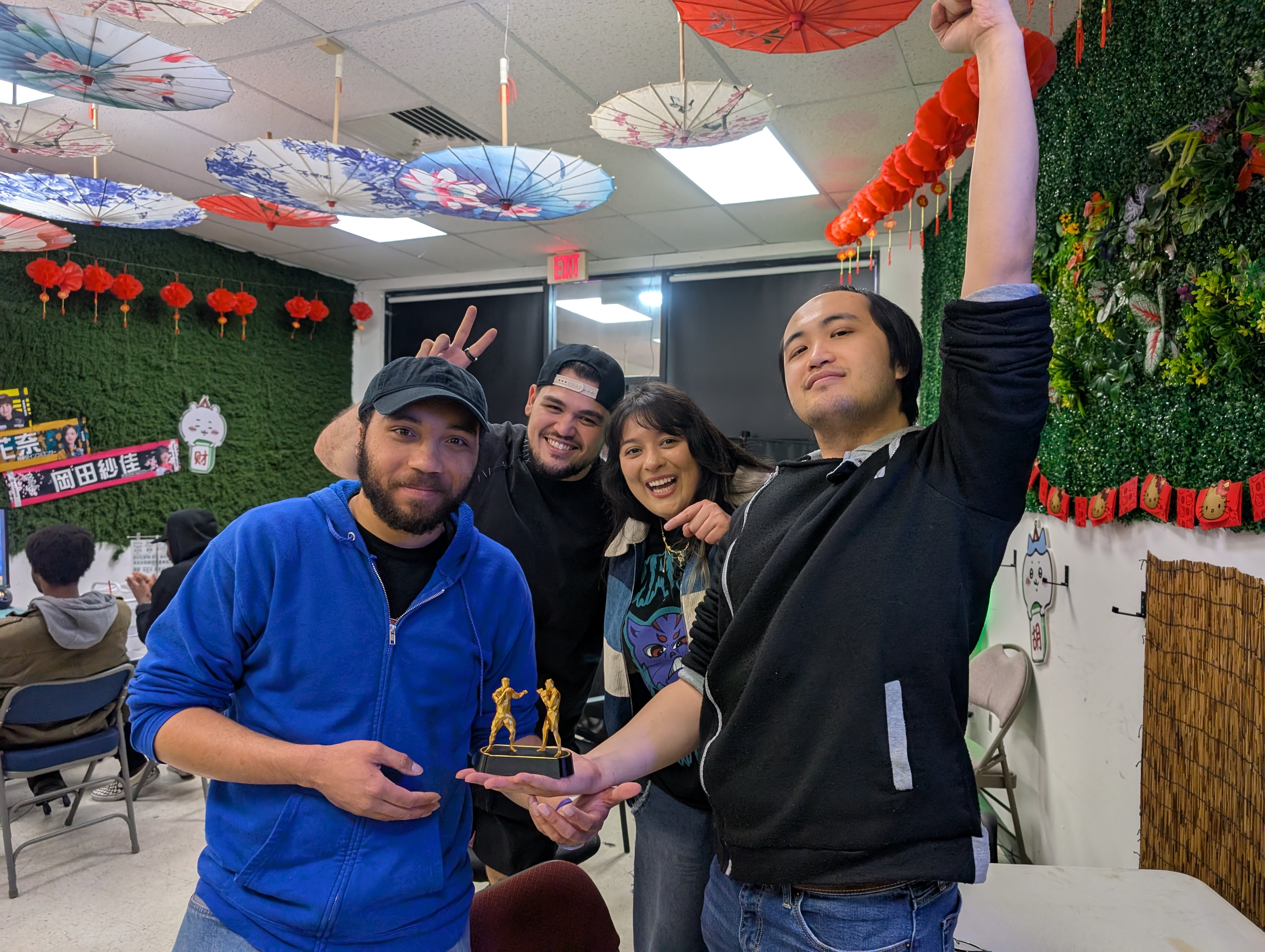
Everything that happened in this tournament will be used as data for the next numbered tournament. The experiment is a success, and the few errors that occurred are easily preventable in future events. I have close to 500 games to choose from for later brackets, so the second biggest issue now after cable management is choosing what games will open the next one. In closing, I must acknowledge Hayama's Fighting Game Database, which launched in June 2026. It has been a tremendous resource for gathering games for this tournament, and will hopefully serve other mystery tournament organizers like myself.