- Tue 20 January 2026
- Event Report
- #magfest, #gaming, #tournament
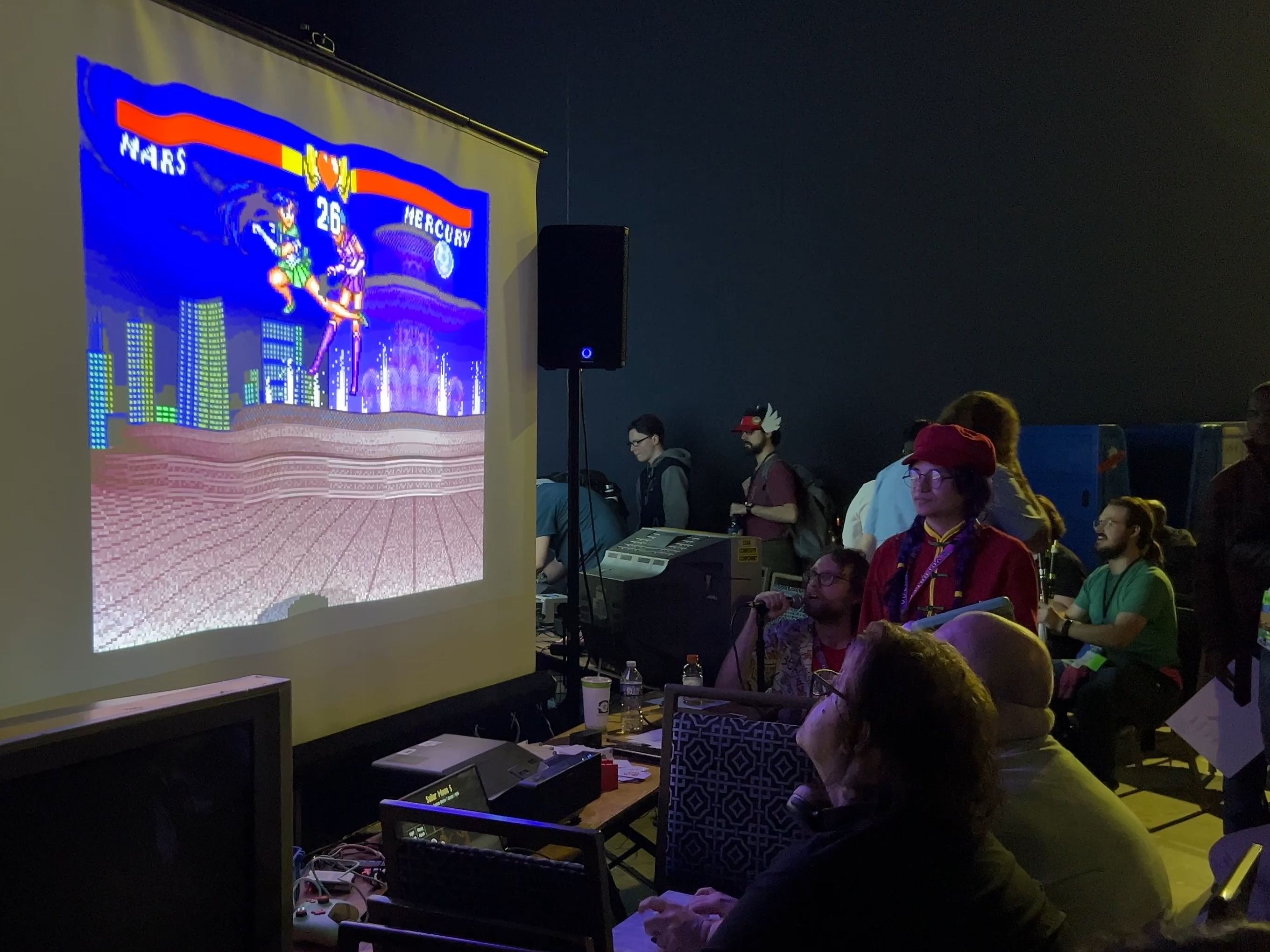 Photo credit: MattoBii
It occurred to me only this month that I've been attending MAGFest for 18 years (missing only 2017 due to a prior engagement), my first being MAGFest 6 in 2008. In the intervening years, I've participated in a number of tournaments, including mystery tournaments, and took note of what I saw as strengths and weaknesses of how they were hosted and organized. One of my pastimes is showing games I think are cool or interesting to people who aren't familiar with them, and mystery tournaments are a very efficient way to do that. The setup I used for this tournament is documented on this page.
Throughout 2025, I hosted mystery tournaments at my local gaming venue to refine the tournament structure for the eventual return of The Big, Huge Mystery Games Tournament for Super MAGFest 2026. This event was far more successful than last year's show, to the point that I got a request to run it again for another event in the DC area this March. I have three non-negotiable priorities with my tournaments:
Smooth player experience in regard to controls and instructions
I built my own two-player arcade-size controller for the express purpose of standardizing controls for games I run in public spaces. It currently uses GP2040-CE on both sides for their low cost and easy maintenance, and the joystick and buttons are Sanwa parts. This removes the need for players to bring their own controllers with the extra setup and removal time that incurs per player[a], at the cost of forcing them to use a button layout and joystick type they may not prefer. In the eight years the controller has been in service, I have never received any complaints about the quality of the controls or the layout.
Full information on the games being played
Some mystery tournament organizers provide no instructions to the players at all for the games, forcing them to figure out the basic controls if it's their first time playing the game. I do not believe this to be a fun experience, so I write instruction sheets for every game I run with controls and some universal commands that I deem important for basic gameplay. There are a few things I won't disclose, however, to leave a little burden of discovery to the players. In particular, I do not include commands for throws in fighting games. The instructions are shown on a small monitor close to the players and are automatically changed as the game launches.
Tournament duration
Tournaments in conventions are given a slot of one or two hours in schedule guides, but in practice, no tournament ever runs that shortly unless they have a small number of players. The registration system used by MAGFest allows a limit of up to 32 players with a waitlist, so I knew that two hours was a very conservative estimate from my experiences with past tournaments. The tournament began at 6:00 PM and ended at 9:07 PM, even with all of my measures to minimize downtime between game changes. This forced me to skip a number of games I planned for the finals, explained below.
Format
Unlike mystery tournaments where the organizer selects the games and the order they are played in advance, I use a roulette wheel where 16 games of my choosing can be picked, but the exact games played are left to chance. Each game is contested for a single set, so every pair of players plays a different game. After a game concludes, it is not played again for the rest of the tournament. The wheel is restocked for each game played, and I have the option to replace games in the wheel at any time based on the conditions of the tournament. This means a large number of games I prepare do not get played.
In my local tournaments, I have a rule where the loser of a game may rematch that same game or spin for a different random game, to give them some agency while at a disadvantage. The majority of players choose to play a new game, but to maximize the amount of games shown at the convention, I introduced a new rule where the third game in a first-to-2 matchup must be a new roll. The grand finals set was first-to-3, but the losing player chose to reroll each time. Had the finals not gone 3-0, I would have only allowed one rematch in the same game per player.
Of the 32 players registered and 7 players in the waitlist, 23 players turned up with three of them coming from the waitlist. For the tournament structure, I planned on running single elimination qualifiers with the top 8 going to a double elimination bracket. The combined runtime of all of the games by the end of the first round did not make this feasible, so I ran the entire tournament as single elimination. I believe all convention tournaments I run with a 32-player cap will be run this way going forward. The top 6 were entered into a single elimination bracket after two rounds of qualifiers. I was able to get a 3rd place match even with this structure, as MAGFest offered prizes to the top four players. All matchups before grand finals were first-to-2, and grand finals was first-to-3.
For grand finals, I normally allow the finalists to freely select any game that had not been played yet, including the special games reserved for winner's and loser's finals. Due to time constraints, for this tournament I changed the grand finals to only allow the games I had prepared for loser's finals, which I selected to be the most challenging to play due to frustrating controls, very unconventional gameplay, or generally poor quality. The games I reserve for winner's finals are those that take longer to set up and play, particularly modern games on Steam with longer rounds. Those games were not played at all.
Games List
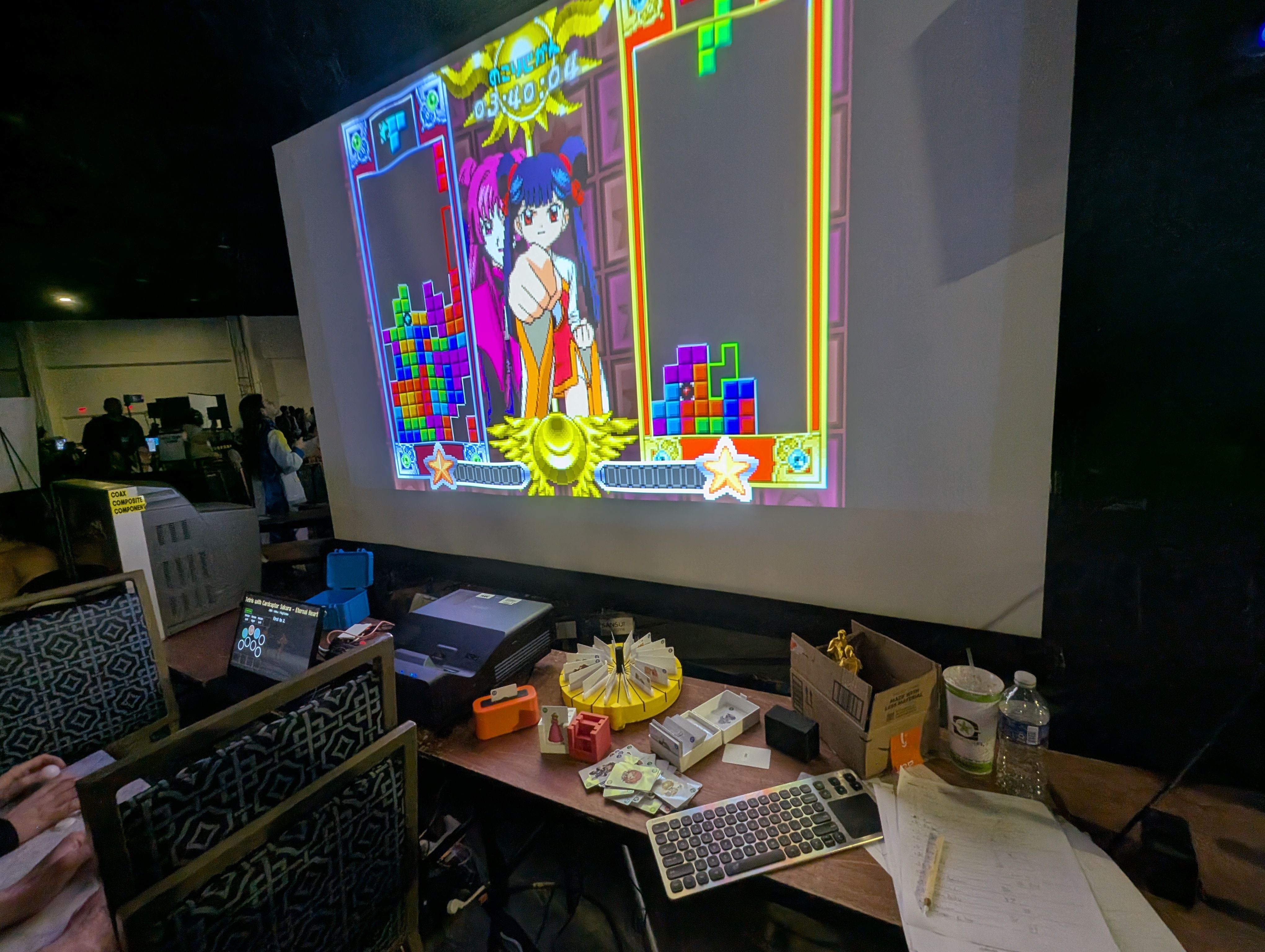
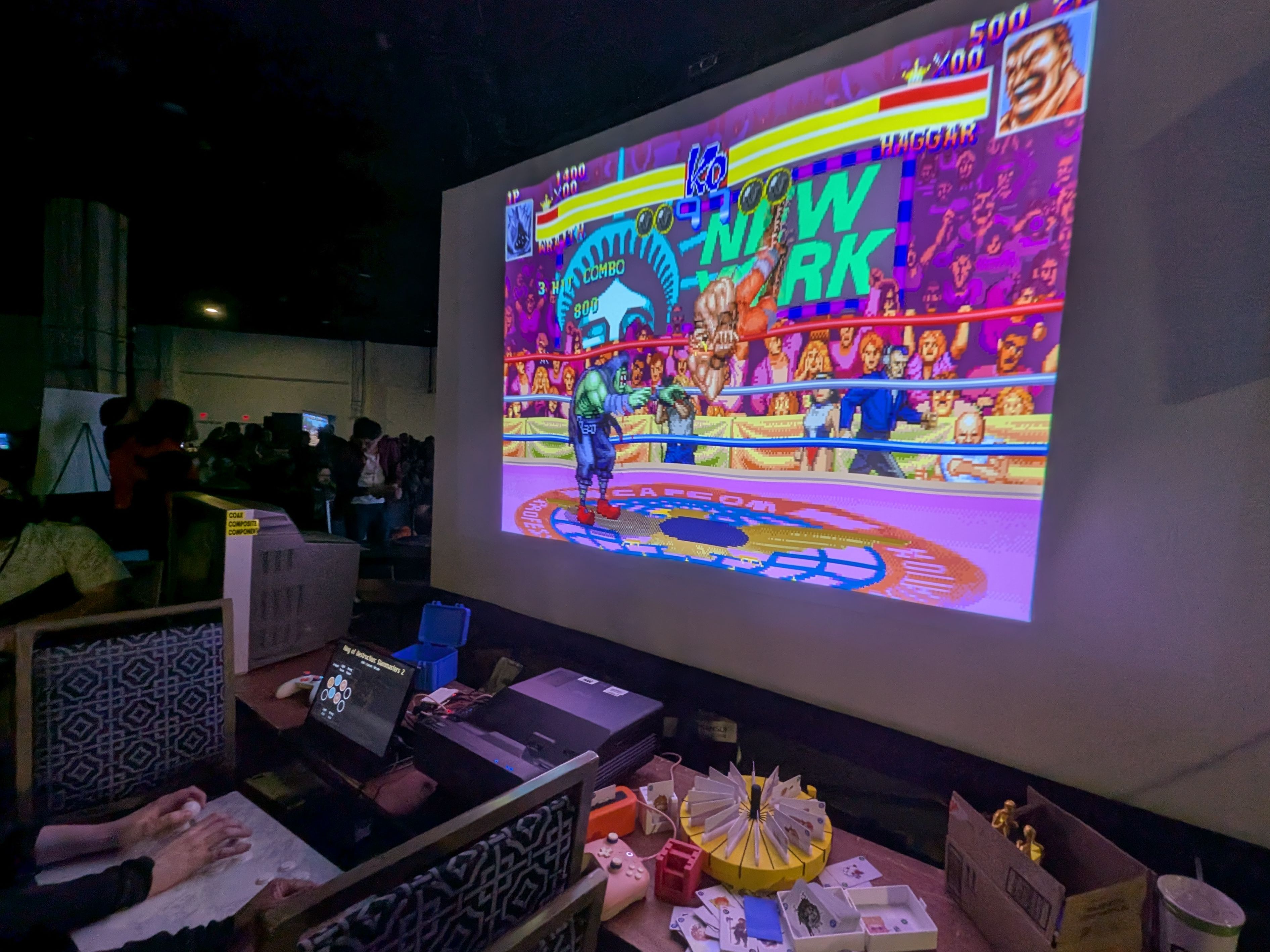
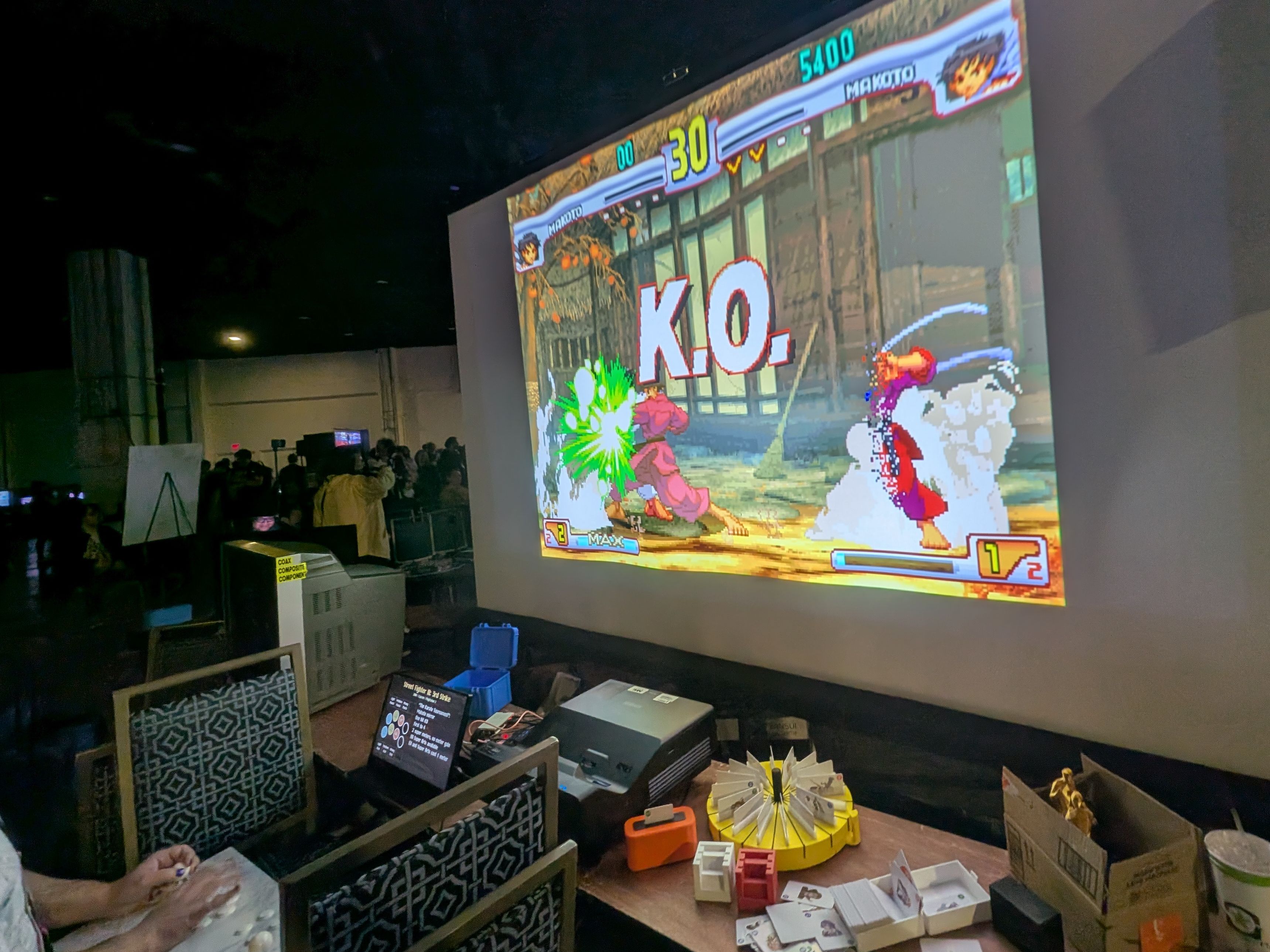
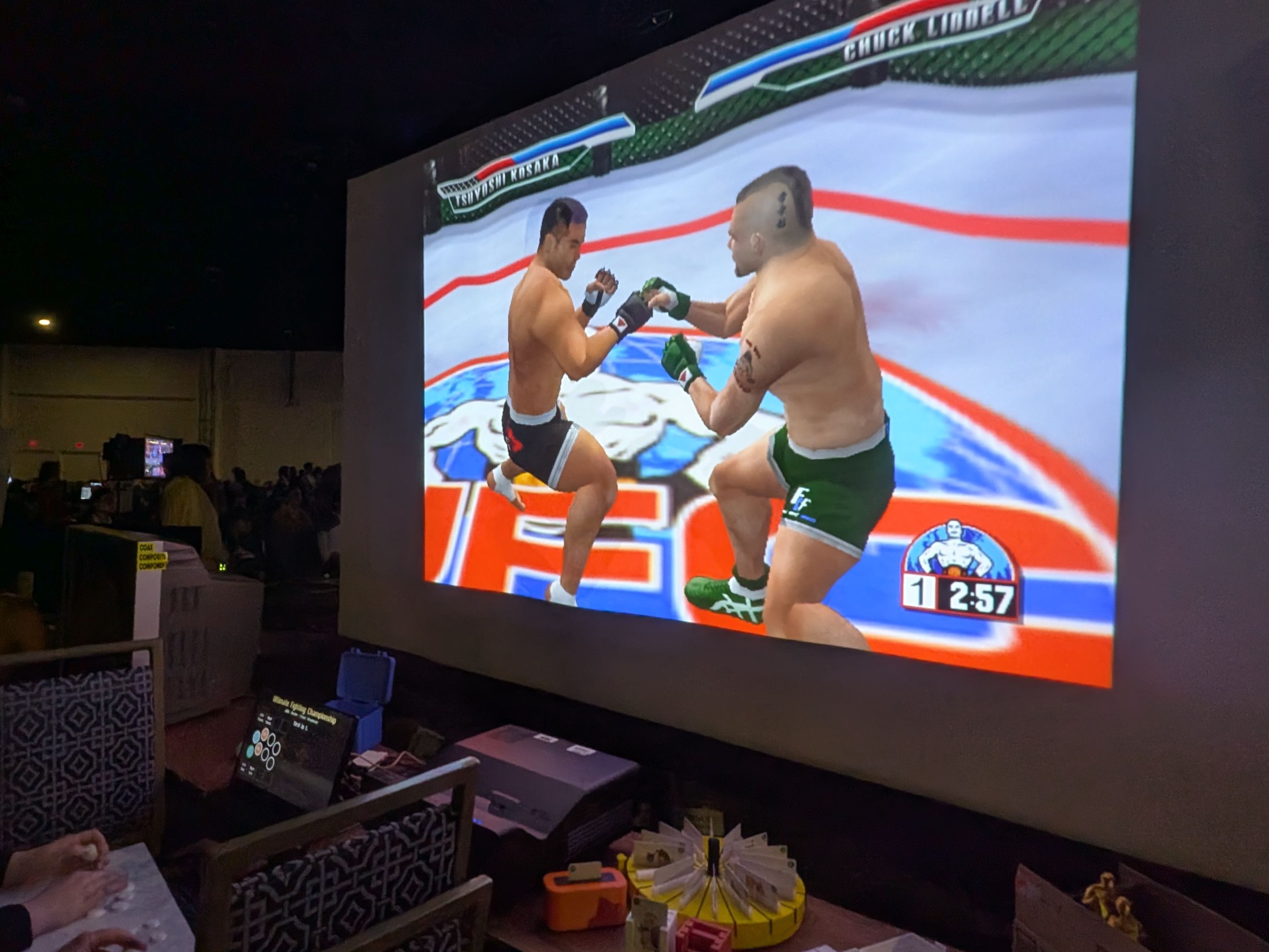
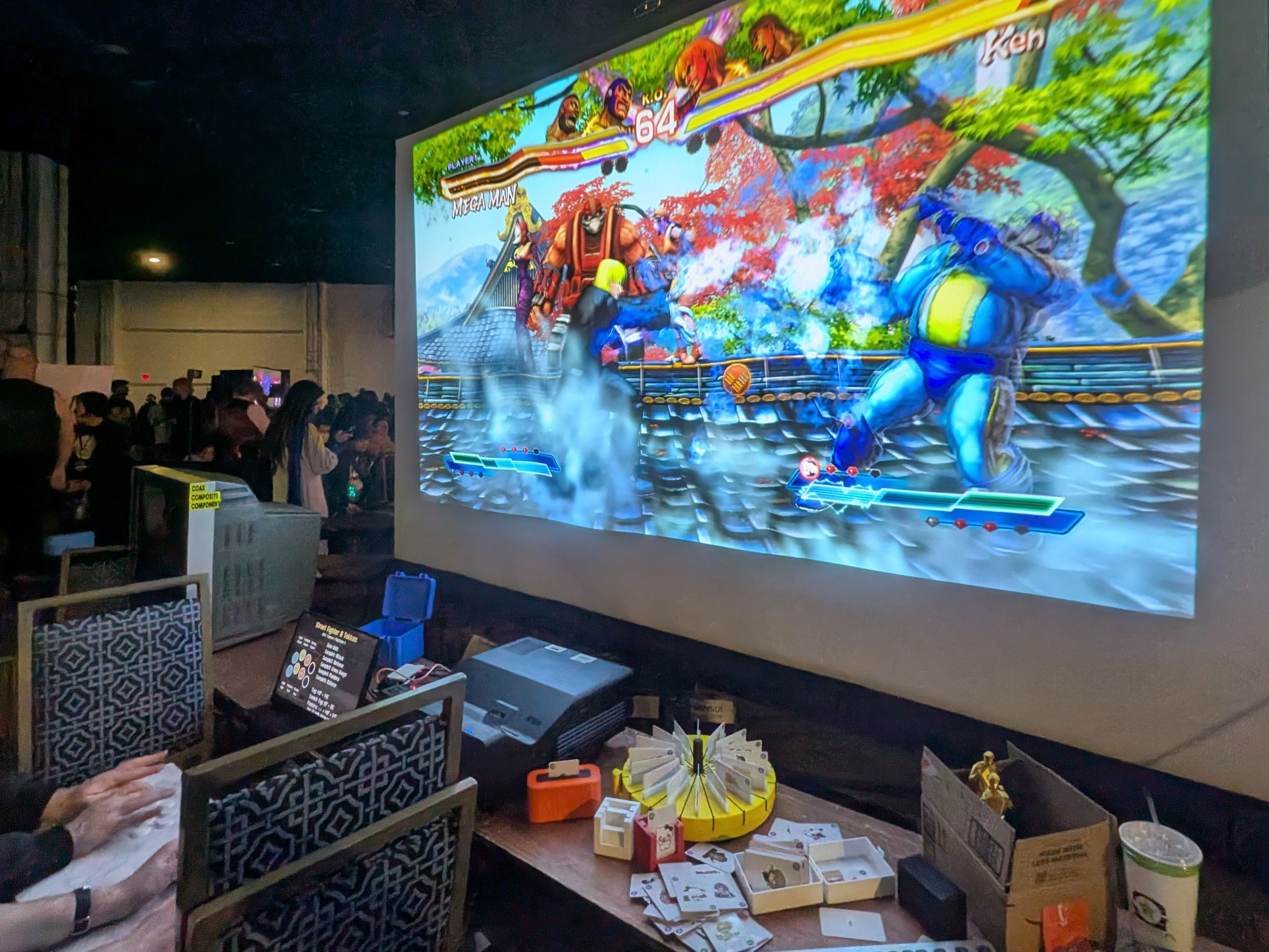
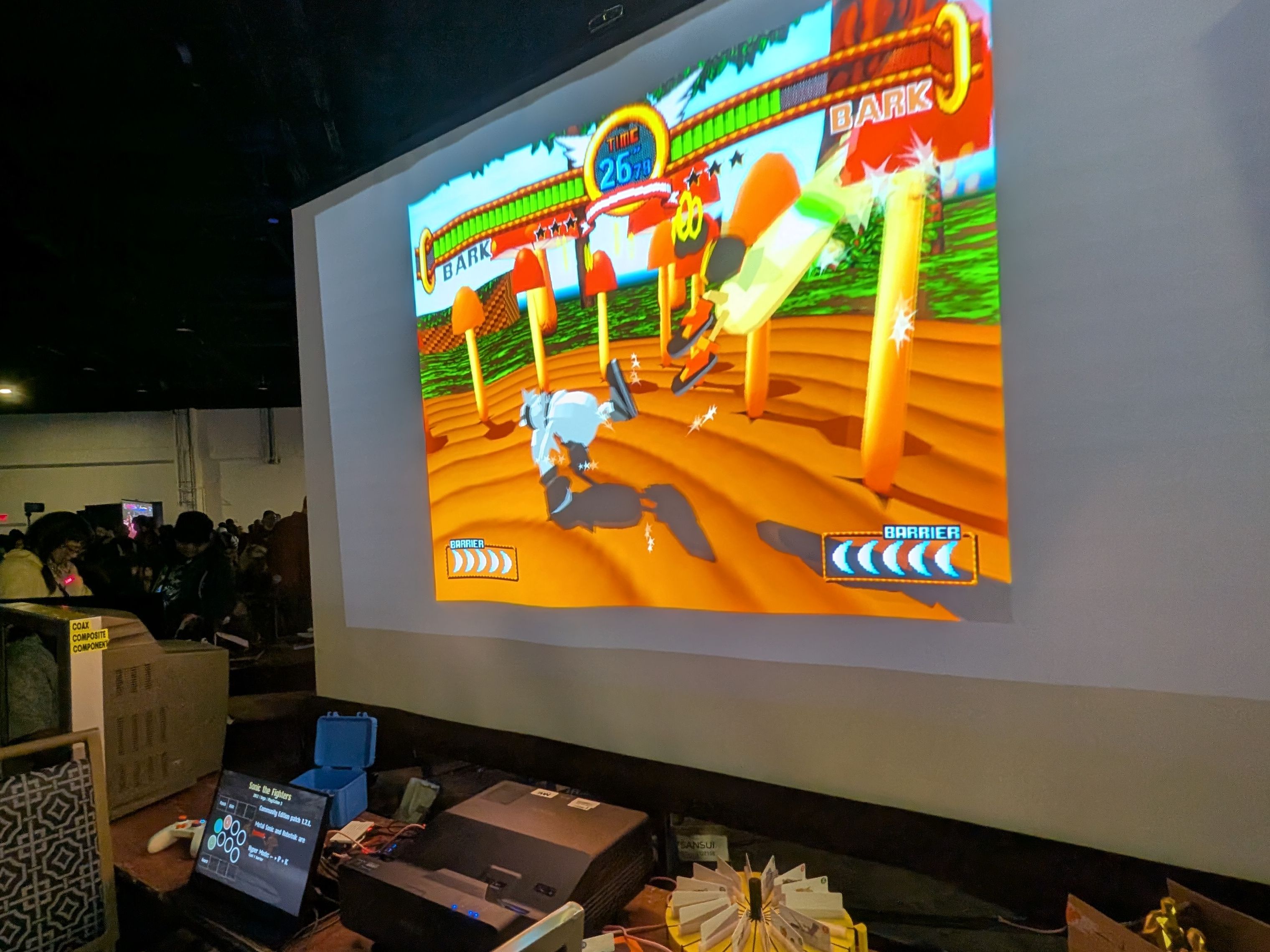
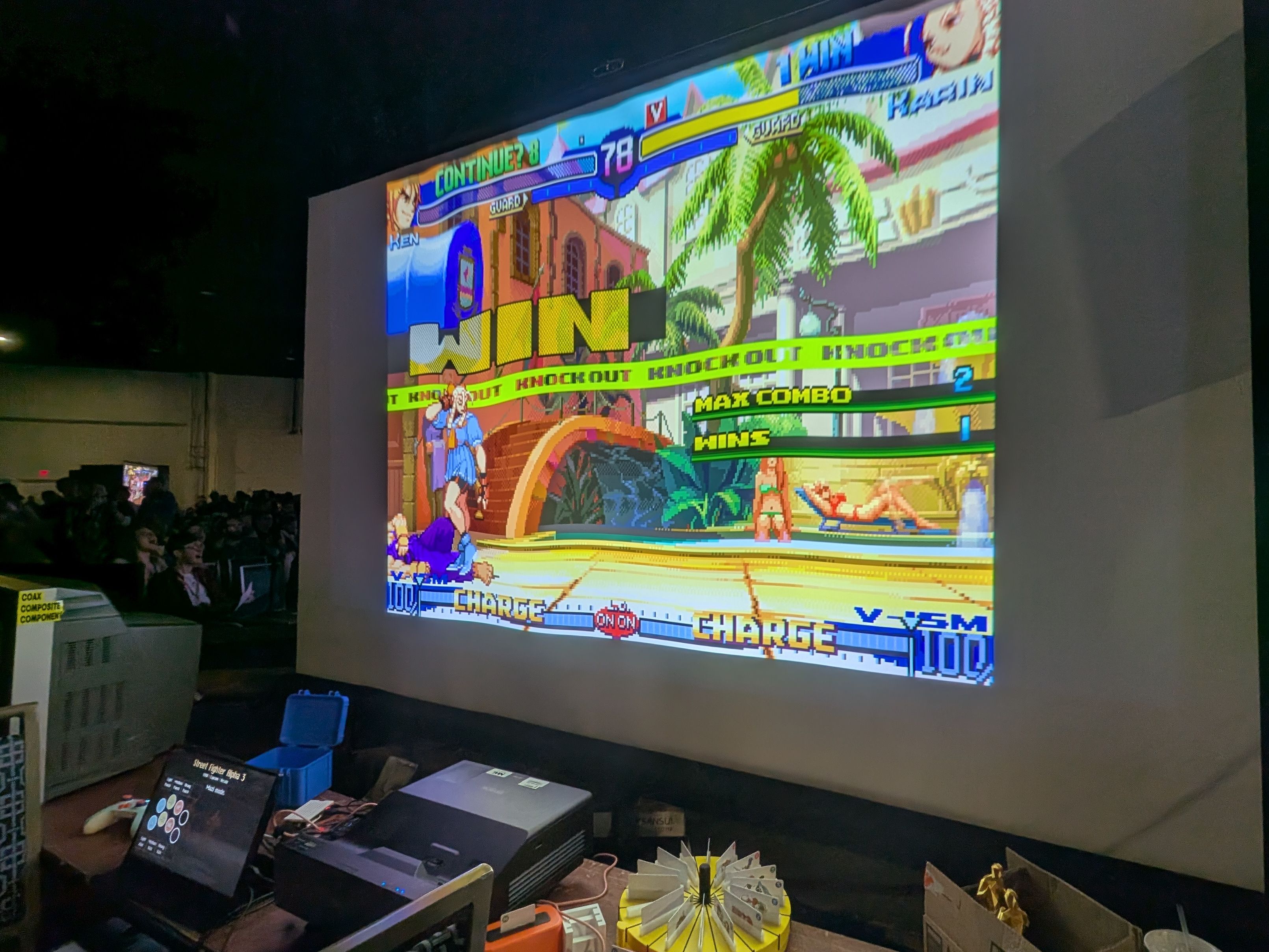
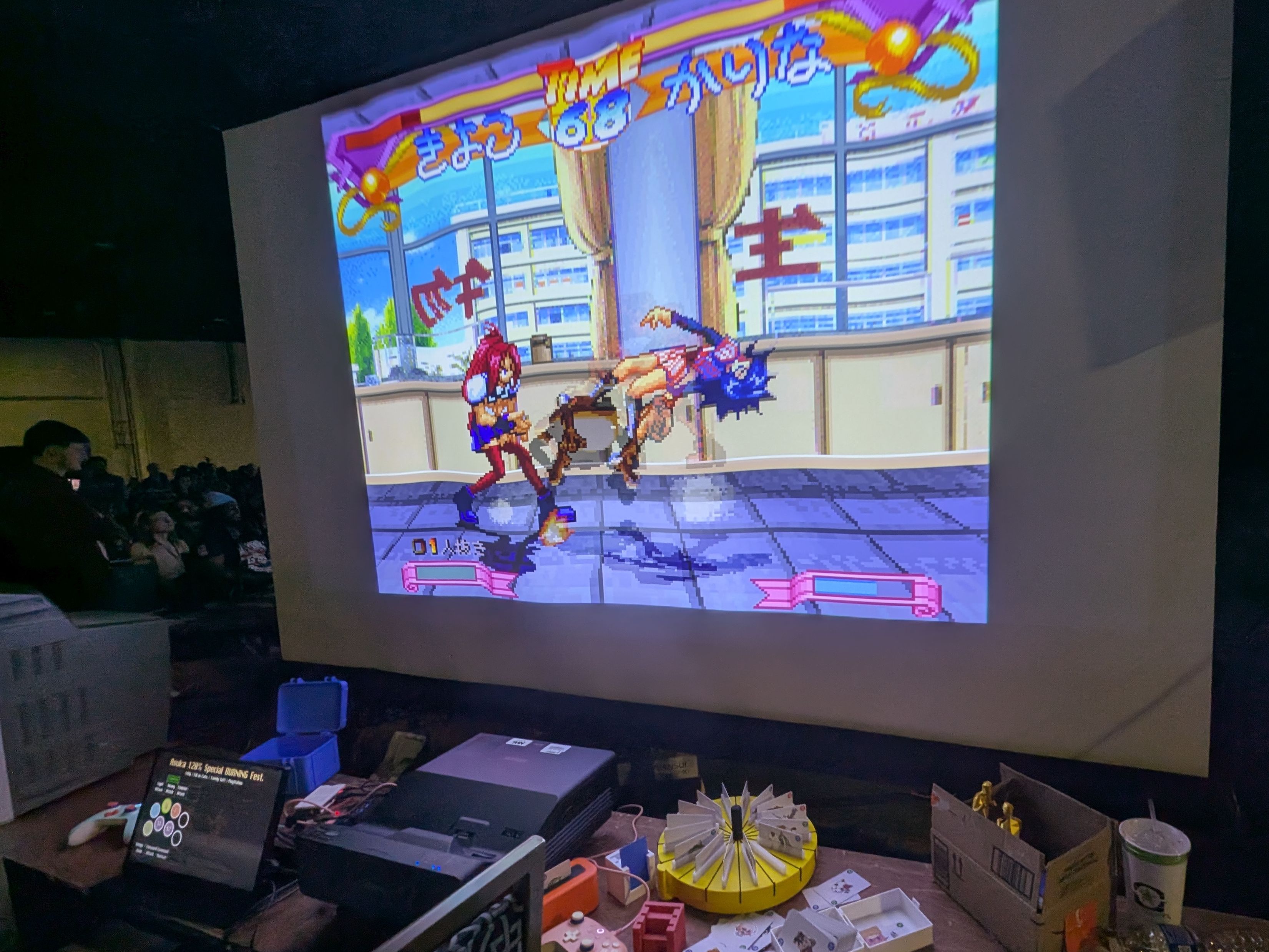
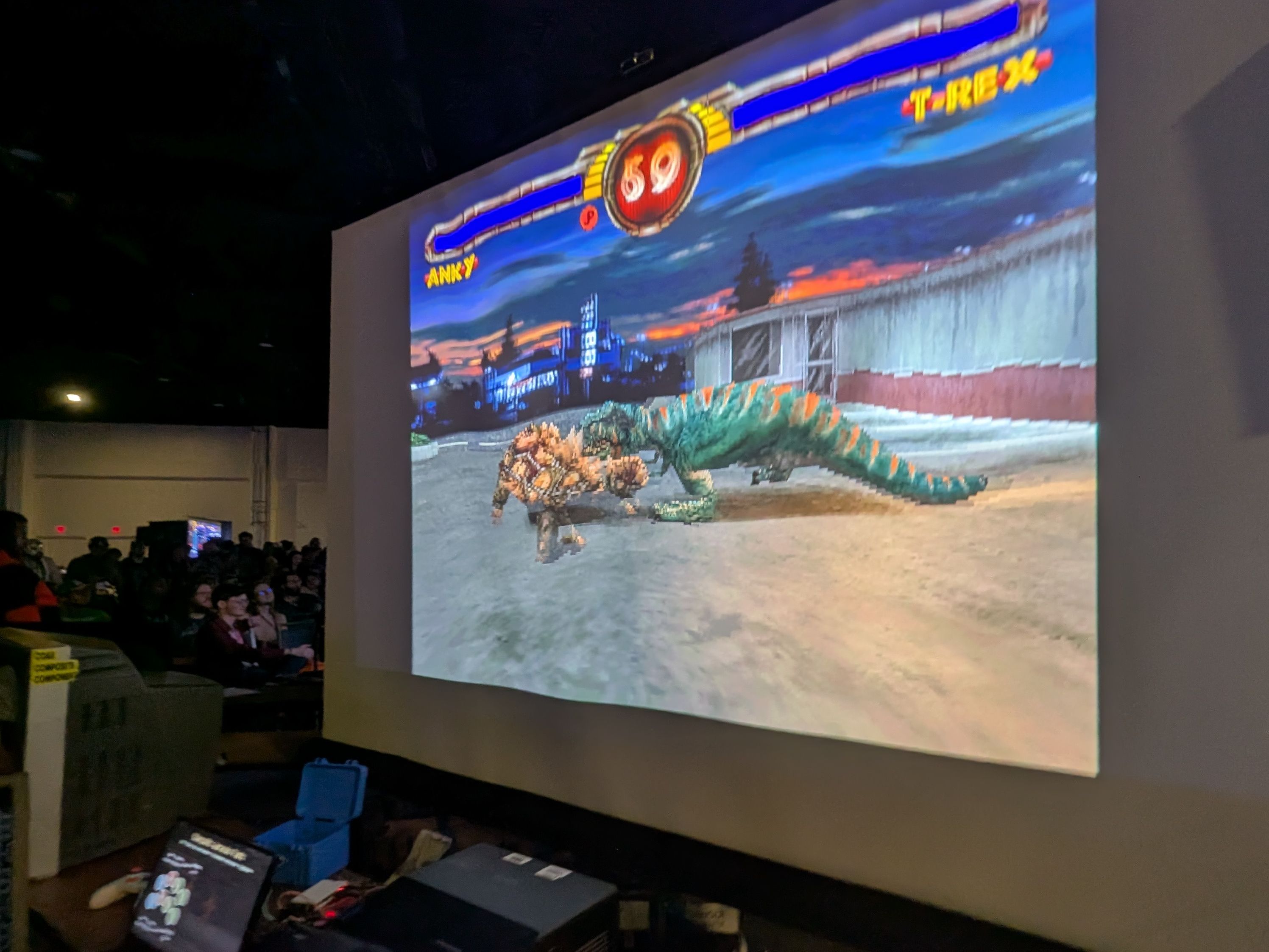
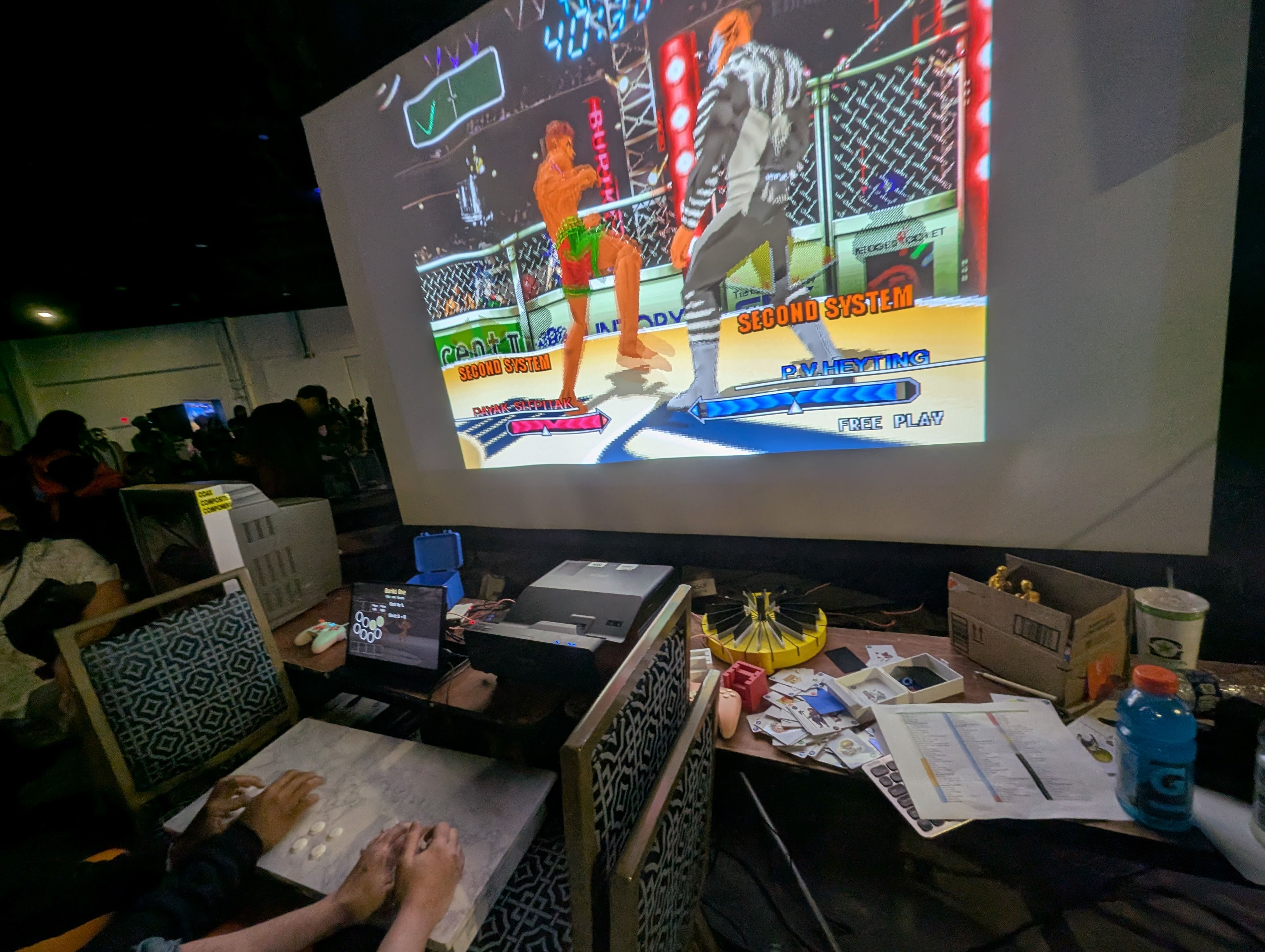
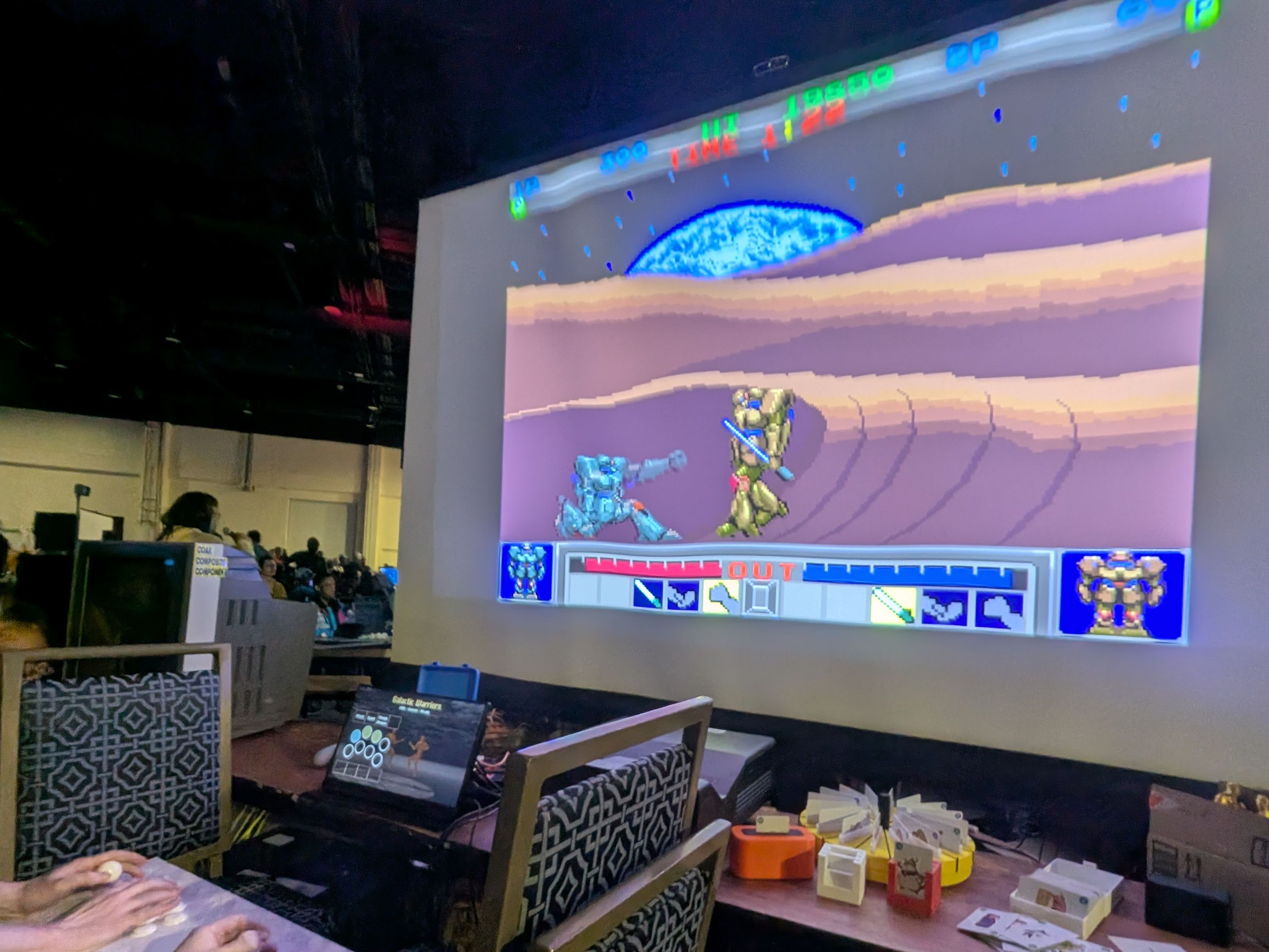
56 games were played in a span of three hours.
- JoJo's Bizarre Adventure
- Fighting Layer
- Akatsuki Blitzkampf Ausf. Achse
- Super Street Fighter II Turbo (New Legacy hack)
- Battle K-Road
- Karnov's Revenge Revolution
- Dan-Ku-Ga
- Breakers Revenge
- Street Fighter EX Plus Alpha
- Matrimelee
- Survival Arts
- Street Fighter Alpha 2
- The Outfoxies
- Zero Divide 2
- Evil Zone
- Sailor Moon S (Tournament Edition hack)
- Ultimate Mortal Kombat 3
- SNK vs. Capcom for C64: Stronger Edition
- Mighty Warriors
- Real Bout Fatal Fury 2
- Art of Fighting 3
- Galactic Warriors
- Tekken 4
- 1 on 1 Government
- DOA2 Hardcore
- Ultimate Fighting Championship
- Street Fighter: The Movie (Tag Team mode)
- Tetris with Cardcaptor Sakura
- Virtua Fighter 4 Final Tuned
- Killer Instinct
- Street Fighter III: 3rd Strike ("The Karate Tournament" custom ruleset, see aside below)
- Street Fighter
- Street Fighter X Tekken
- Power Stone
- Alien Challenge
- Street Fighter III: 2nd Impact
- Sonic the Fighters (PlayStation 3)
- Soulcalibur III (Community Edition hack v1.11)
- Super Puzzle Fighter II Turbo
- Melty Blood Actress Again Current Code
- Street Fighter Alpha 3 (Mazi mode)
- Guilty Gear
- War Gods
- Killer Instinct 2
- Best of Best
- Asuka 120% Special
- Warpath: Jurassic Park
- Ring of Destruction
- Holosseum
- Soul Calibur II (GameCube; Extra VS, Charade Mirror)
- Super Dragon Ball Z
3rd Place Games
- Street Fighter II: The World Warrior ("Choose Same Character" hack)
- Samurai Shodown Sen
Grand Finals Games
- Buriki One
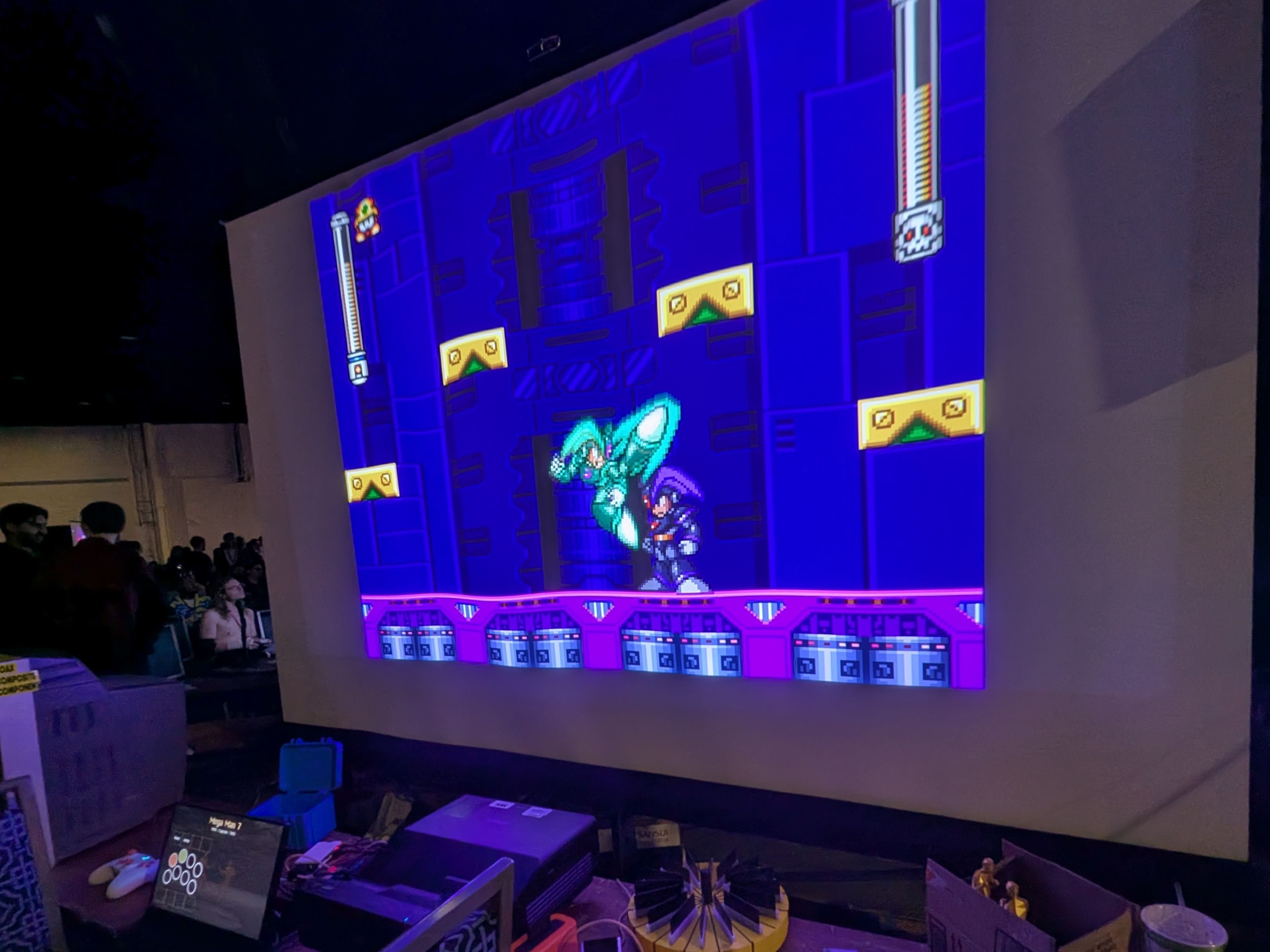
- Mega Man 7
- The Master's Fighter
Street Fighter III: 3rd Strike - The Karate Tournament
This is a minigame of my own invention, and it requires a console version with all of the System Direction pages and Extra Options unlocked. Both players use Makoto.
In the standard options, set the time limit to 30 seconds, best of 7 rounds, damage level to maximum, and handicap on.
In Extra Option, set 1P and 2P Vitality on page 1 to 1, 1P/2P S.A. Gauge Length on page 2 to -8, S.A. Gauge Increase Speed on page 2 to 1, and Life Gauge Display on page 4 to Off.
In System Direction, set EX Move Energy Requirement on page 6 to 4, S.A. Gauge Max Start on page 8 to On, and All Super Arts on page 10 to On.
After selecting characters, set both players to 1 handicap.
See this image for a reference on which System Direction and Extra Options to change.
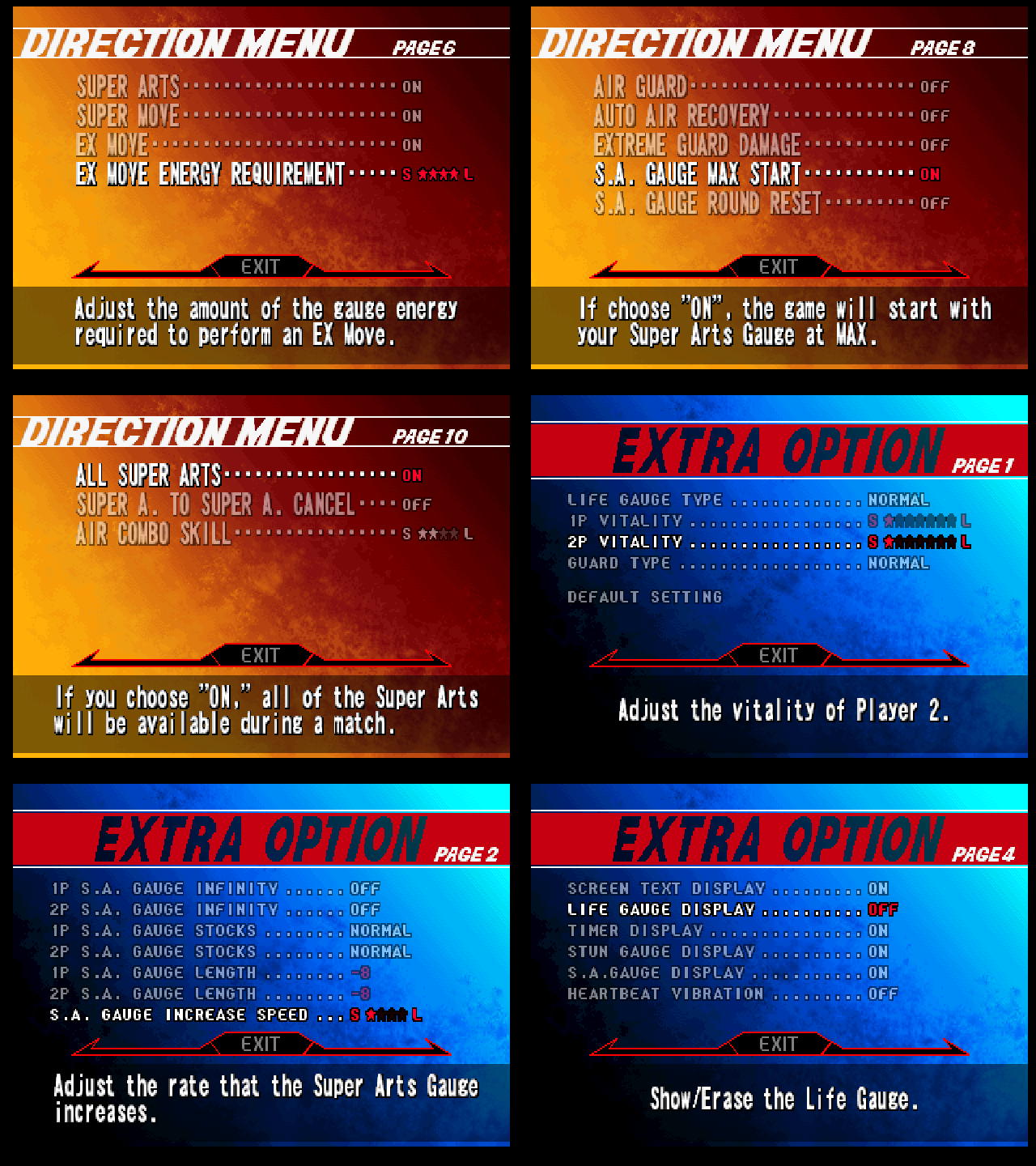
This simulates a point karate tournament as closely as possible, where single clean hits decide rounds. With health and handicap set to the lowest possible values, it isn't a true one-hit KO mode, as a few light punches and kicks will not cause KO, but any stronger attack will. Players can use any Super Art and EX move from the start, but can only use two total for the entire match.
For maximum effect, select the white and red palettes (Start+LP and Start+MP) and Makoto's stage. If you're using emulation, create a save state immediately after choosing the stage. I have found that the PS2 port included in the Street Fighter Anniversary Collection emulates better in PCSX2 than the Dreamcast port does in Flycast.
It got such positive response that I would like to host a tournament only of this minigame, similar to the tournament for the Samurai Kirby minigame in Kirby Super Star.
Issues and Resolutions
The highest priority I have with all of my tournaments is a smooth experience for the players, including what the spectators see on screen. The first game that was selected was Guilty Gear XX Accent Core +R, but upon launching it, Steam raised an error regarding cloud sync. This was because I had forgotten to set Steam to offline mode, which would have prevented this. I did so, and although there would not have been any issues with Steam games after doing this, I decided to err on the side of caution out of consideration for the limited convention time and not use any Steam games at all for the tournament. I had the players spin again rather than take further chances with Steam problems, and the arcade game JoJo's Bizarre Adventure was the actual first game[c]. The large volume of games I had that ran on emulators mitigated the problem with Steam cloud sync, though I had to miss out on running games like Nidhogg or Guilty Gear Xrd Rev2 or even Ultra Street Fighter IV with the SF4 Remix mod. In order to prevent this from occurring again, I will need to set Steam to offline mode before packing.
I use a twin arcade stick construction with both players using their own GP2040-CE controller board. To expand the possibilities for game selections, I added two 8BitDo wired controllers with a traditional gamepad layout as controllers 3 and 4. To maximize the chances that the games assign the controllers to the correct players, I always plug in the boards in order in the same USB ports shortly after boot, and still some emulators are inconsistent about controller mappings. In my testing, I have found that RetroArch can be consistent with controller assignments even though it is notoriously difficult to configure in the best of times. A week before MAGFest, I found what I believed to be a consistent configuration for four controllers connected in a specific order in specific ports, even though the controller names did not match the physical devices. However, come tournament night, a handful of RetroArch games were missing controller mappings on one side. This is in spite of rigorous testing several nights before without the PC being used at any point between then and the tournament. I had no desire to configure RetroArch in situ, so I skipped over Kunio-kun no Nekketsu School Fighters on Genesis and WarioWare Chicken Race on Game Boy Advance, two games I really wanted to showcase. Only these games had problems; the other games on RetroArch such as Sailor Moon S and SNK vs. Capcom for C64 ran perfectly. After I returned home, I recreated the exact environment from the tournament with the controllers plugged in the same order and found that the games in question all ran correctly with the expected controller mappings. I have yet to determine why only a small number of games did not respect the mappings I verified before the tournament, which is troubling as I intend to bring this setup to future events this year. As a further sticking point, no games were chosen that used the 8BitDo controllers.
One last issue I had is comparatively minor, but a personal one. After the tournament, I was asked for social links. I am very bad about self-promotion, even for my personal projects I have put years of my life into. This will be solved by adding links to my website and points of contact to the attract mode video loop between games.
Conclusion
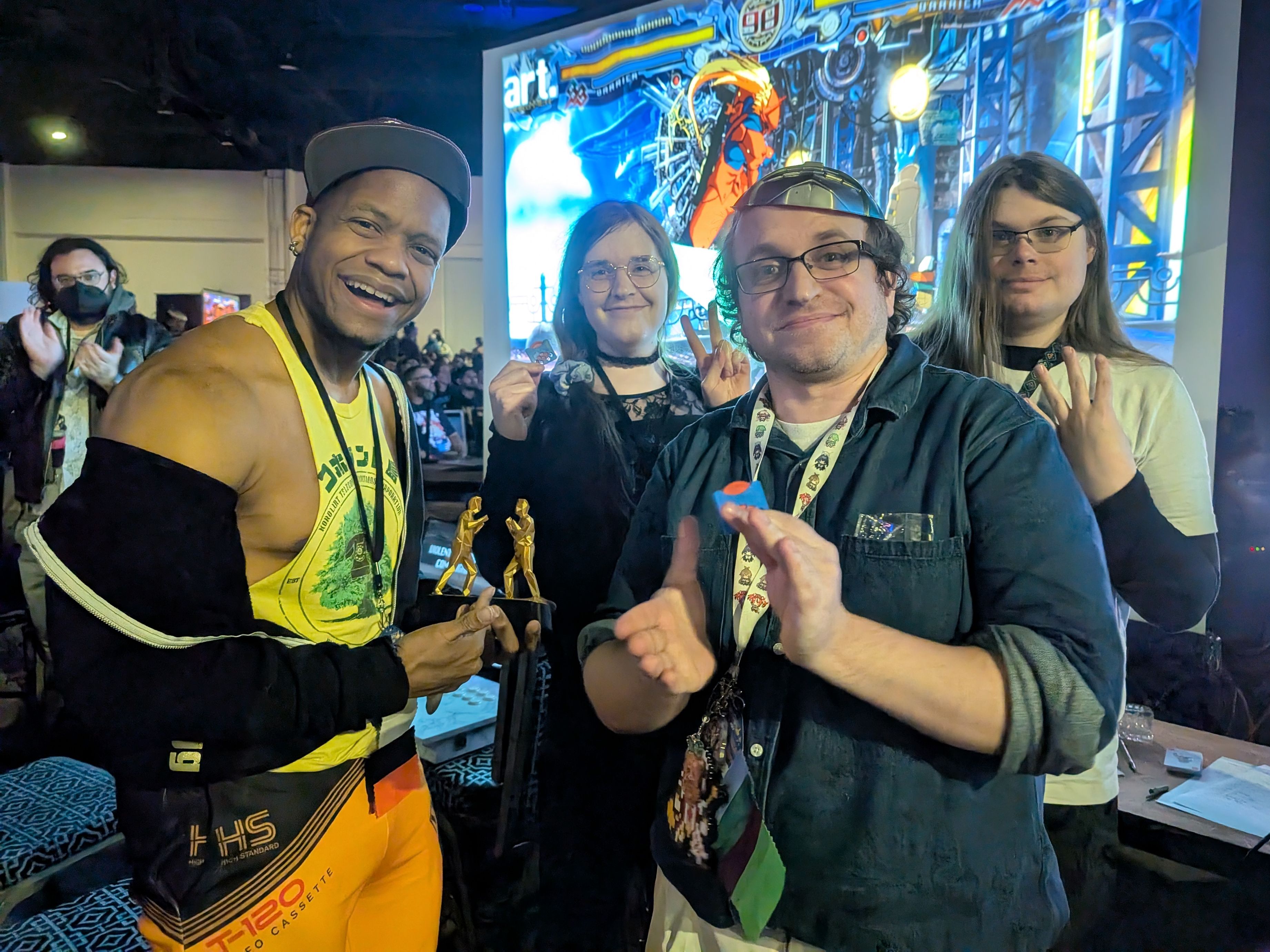
Overall, the tournament went as well as I could have hoped. I arrived more than 30 minutes in advance for the start of the tournament and that turned out to be exactly enough time to prepare. It is a tremendously complicated setup, with two discrete systems and two monitors with as many as six devices to connect to the game PC, but I feel it's worth the effort to ensure rapid player turnover in a time-constrained environment like a gaming convention. It was very fortunate that one of the last games played was Mega Man 7, fitting for the Mega Man X-themed Super MAGFest 2026. I can say with confidence that as long as I'm allowed to return to MAGFest as a staff member, The Big, Huge Mystery Games Tournament will be a yearly fixture.